
Some school events need a stage, a sound system, and a stack of permits.
A school family game night needs a room, some tables, and a date on the calendar.
That’s pretty much all it takes to run this fabulous event.
If you’re the family fun chair at your school, staring at a small budget and an even smaller volunteer list, this might be the event you’ve been hoping for.
Your school families do most of the heavy lifting by bringing the games themselves (more on that in a minute).
The rest is picking a date, spreading the word, and having a cleanup plan.
So here’s how to organize a school family game night, start to finish.
What Is a School Family Game Night?
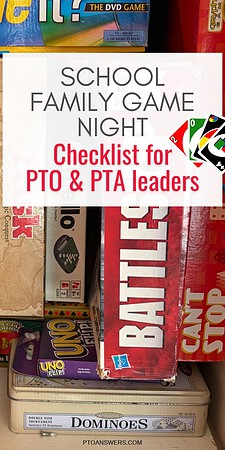
A school family game night is an event where students and their families gather at the school, usually in the cafeteria, library, or gym, and play board games and card games together.
Families spread out across the space, but this is a mix and mingle event, not a night of every family staying in its own little silo.
There’s no program, no schedule, and no stage.
It’s a great casual family fun activity for the elementary school age set.
Older students tend to enjoy school events that are not with their parents and families, so if you’re planning for middle or high school, save this one for your younger grades.
But you certainly can run a similar playbook for the event with middle school and high school students.
Ask Your School Families to Bring the Games
This is the secret to a school game night that costs almost nothing.
Ask each family to bring a game that can be played in an hour or less.
(And no Monopoly. Sorry, would be real estate moguls.)
Here are some easy examples to share with families in your invitation:
- Guess Who
- Uno
- Chess
- Twister
- Jenga
- Exploding Kittens
- Spot It
- Throw Throw Burrito
- Pay Day
- Life
When families bring the games, you’re pretty much guaranteeing there will be age appropriate options for everyone in the room, from kindergarteners to fifth graders.
Families know their own kids best, so you don’t have to guess what will work for every grade.
And it’s fun to see what games families bring.
Tweak for Middle School and High School Game Nights
The one change you’ll need to make in order to fun a game night for your middle school or high school is that you won’t be able to rely on students bringing the games.
You’ll need to provide the games, so this is where you might need to build up a collection to have a set on hand.
What If a Family Shows Up Without a Game?
Easy.
They pair up with another family.
That’s the whole fix, and it’s kind of the point.
Game night works best when families mix, so invite everyone to join a table, learn a new game, and trade tables as the night goes on.
Nobody gets left out, and nobody has to feel awkward about forgetting to bring a game.
Start a Small PTO Game Collection (Optional)
If you’d like a backup stash for future school events, you can start a small game collection for the PTO.
It doesn’t have to cost much.
Some easy ways to start your PTO’s collection is to ask in your local Buy Nothing groups for game donations.
Hit the Black Friday sales to pick up games cheap.
Even if your PTO has a game collection, asking families to bring a game is still a fantastic way to cut down on both the workload and budget you need for this school event.

Scale the Snacks to Your PTO Budget
Depending on your overall family fun budget, you can scale this event up or down.
The snack table is where that happens.
If You Have a Small Budget
Keep it simple with light snacks.
Popcorn is a great inexpensive option.
Some movie theaters will even donate big bags if you ask, you’ll just need to do the legwork of picking it up before your event
If You Have More to Spend
You can offer more elaborate snacks.
Whatever your budget, steer clear of sticky food.
You don’t want the games ruined by residue left behind.
Pick the Date and Plan for 2 to 2.5 Hours
Pick a date that doesn’t conflict with anything else on your school or community calendar.
The ideal length for a school family game night is about 2 to 2.5 hours.
That’s long enough for families to play a game or two, meet some new people, and try something they’ve never played before.
It also fits nicely with asking for games that can be played in under an hour, since families can finish one and move on to the next table.
And if game night goes well, a school family movie night makes a great follow up event.

Publicize Where Your School Families Already Look
As with any PTO event, the key to success is publicizing well in advance so school families have a chance to make sure they can come.
Tell people too late and you’re sabotaging your own turnout.
Spread the word everywhere your families are already paying attention:
- Flyers sent home with students.
- Social media posts, more than once.
- Morning announcements.
- Teacher and classroom newsletters.
In every message, include the two things families need to know:
Bring a game you love to play, and if you don’t have one, you’ll pair up with another family.
Here are additional ways to publicize PTO events to ensure you’re putting this information in front of parents and families.
Don’t Forget to Hype Up the Kids
Students are part of your publicity plan, too.
Kids who are excited about game night will mention it to their parents at home, and that boosts participation.
A shout out during morning announcements is a quick way to get them talking.
Set Up and Clean Up in the School Space (The Easy Part)
This event takes minimal set up and clean up.
The bulk of the work is organizing everything in advance, and on the night, everything comes together pretty smoothly.
You don’t need to worry about music, either.
Families have to talk to each other to play the games, so a playlist would just get in the way.
For cleanup, ask your school custodians to set out a few trash bins around the space.
When trash cans are easy to find, families clean up after themselves, and cleanup becomes pretty quick and painless.
Your School Family Game Night Checklist
- Pick a date with no school or community calendar conflicts.
- Plan for about 2 to 2.5 hours.
- Publicize early and often, including to the kids.
- Ask families to bring a game that can be played in under an hour.
- Tell families without a game they can pair up with another family.
- Plan snacks that fit your budget, and skip the sticky ones.
- Ask the custodians for a few extra trash bins.
- Ask a local movie theater about donated popcorn.
After Game Night: Wrap Up the Event
The night isn’t quite done when the last family heads out.
A few small steps after the event will make next year’s game night even easier.
- Make sure every family leaves with their own game. A quick scan of the tables before you lock up helps.
- Send a thank you to your volunteers and to the custodians who set out those trash bins.
- Share a few photos on social media to build excitement for the next event.
- Ask families what they enjoyed and what they’d change.
- Jot down which games were hits, especially if you’re building a PTO collection.

Ways to Switch Up Your School Family Game Night
Once you’ve run a basic game night, you can mix things up from year to year to keep things fresh.
Here are a few easy variations.
Pajama Game Night
Invite everyone to come in their pajamas.
It’s a simple theme that costs nothing and gets the kids excited because wearing pjs to school is super fun.
Tournament Night
Pick one or two easy games, like Uno or Jenga, and run a friendly tournament alongside the regular play.
It gives families a reason to move around and meet new people.
School Family Game Night FAQs
What games should families bring to a school family game night?
Ask for games that can be played in under an hour, like Guess Who, Uno, Chess, Twister, Jenga, or Exploding Kittens.
Skip the long ones like Monopoly.
When families bring the games, you’re pretty much guaranteeing there are age appropriate options for everyone.
What if a family comes without a game?
They can pair up with another family.
A school family game night is a perfect mix and mingle type of event, so families are encouraged to join other tables rather than stay in their own groups.
How long should a school family game night last?
About 2 to 2.5 hours is the ideal timeframe for a school family game night.
That gives families time to play a game or two, meet other families, and try something new.
How much does a school family game night cost the PTO?
Very little.
Families bring the games, so your main expense is snacks, and you can scale those to fit your budget.
Popcorn is an inexpensive option, and some movie theaters will donate big bags if you ask.
What grades is a school family game night best for?
It’s a great family fun activity for the elementary school age set.
Older students usually enjoy school events that are not with their parents and families.
You’ll need to provide the games for older kids.
Don’t rely on them to bring them.
How much setup and cleanup does a school family game night need?
Minimal.
Most of the work happens in advance, and on the night families simply play and mingle.
Cleanup is easy when the school custodians set out a few trash bins, since families can clean up after themselves.
Over to You
A school family game night comes down to a few simple moves.
Families bring the games, you bring the snacks, and early publicity fills the room.
Add a few trash bins, a date with no conflicts, and a 2 to 2.5 hour window for everyone to mix and mingle, and you’ve got an event that nearly runs itself.
So here’s your next step.
This week, check your school and community calendars, pick a date, and send your school families a note asking them to bring a game (or come ready to pair up).
Want more events like this one?
Browse our family fun ideas for schools and pick your next one.