
School Parent Teacher Organization (PTO) parent groups run on volunteers that give their time and talents to benefit the entire school community.
PTOs struggling to attract parent volunteers isn’t new issue facing most PTOs.
It’s the perennial challenge every PTO leader faces.
But just because it’s a common issue pretty much every PTO will face at some point, doesn’t mean it’s unsolvable.
The good news?
The strategies that actually work to attract parents as volunteers to your PTO are simpler than you think.
Let’s get into some parent involvement and volunteer recruitment tactics any Parent Teacher Organization can use to grow their group’s volunteer base!
Personal Recruitment Works
Flyers don’t recruit parents.
Emails don’t recruit parents.
Social media posts don’t recruit parents.
People recruit people.
This is the reality that changes everything.
PTOs spend energy on broadcast methods like a general email to all families or help wanted posts on social media because they feel efficient.
But efficiency and effectiveness aren’t the same thing.
Your most powerful recruitment tool is a direct, personal conversation with parents.
Parents stay on the sidelines of your PTO not because they’re apathetic.
They don’t get involved because no one has personally looked them in the eye and said, “Hey, we need you. Will you help?”
I watched this play out with someone I knew casually at my kids’ elementary school.
I saw her at the school flagpole at pick up time most days and would usually strike up a conversation with her.
About a week out from the PTO meeting, I asked her to come.
Not to help with anything, but just to come to the meeting.
She showed up to the meeting and later became a firecracker committee chair who overhauled our reading program.
Years later she thanked me for making that initial ask and told me that she never would’ve stepped up if I hadn’t specifically asked her.
The flyer?
She didn’t even remember seeing it.
But that personal conversation at pickup?
That stuck with her!
Strategy #1: Show Up Where Parents Already Are
Stop waiting for parents to come to you at the proverbial PTO membership table.
Talk to them at the playground.
Say hi them at the grocery store.
Catch them on the sidelines at soccer practice.
Make genuine, one-on-one requests instead of hoping someone sees an email or a Remind notification.
The key here is meeting them in their natural spaces, at times when they’re probably available to talk.
You’re not asking them to add “attend a PTO recruitment event” to their calendar.
You’re simply showing up and having a real conversation with them.
Strategy #2: Start With a Smaller Ask
You don’t have to ask someone to become a committee chair or take on a major role right away.
That’s intimidating, and it sets a high barrier to entry that’ll send most people running for the hills, and never looking back.
Invite them to a PTO event first.
Get them in the door.
Let them see what your PTO is actually like.
Give them the time and space to check out the vibe of the group and meet some people.
And once you can sense they’re game for more, make the bigger ask.
Suddenly, becoming a volunteer or taking on a leadership role doesn’t feel like signing up for the unknown. It feels like joining something they’re already familiar with.
This step by step approach works because you’re not just recruiting volunteers.
You’re inviting people into connection.
And connection is what people actually crave.
Strategy #3: Make Your PTO Actually Worth Joining
Personal recruitment only gets you so far.
Once people say yes, your PTO has to deliver.
Post-pandemic, a lot of us have had to shake off some negative associations with PTO culture (they’re everywhere!).
The cliques.
The disorganization.
The feeling that certain people “run things” while everyone else is on the outside.
If your PTO has breakdowns, communication gaps, or that unmistakable “us versus them” vibe, personal invitations will only get you so far.
People notice all of these things.
And they won’t stay involved.
This is why structure matters.
Not an overly complicated, corporate structure.
Just clear systems so that your group isn’t flying by the seat of their pants so to speak.
Know what roles exist.
Communicate expectations.
Make it obvious how decisions get made.
Set up simple communication channels so everyone knows what’s happening.
The real goal?
Make sure that when someone shows up, they feel welcomed and they know what’s going on.
People love being part of an organized group that has most of its ducks in a row.
But they’ll flee from your group if it’s a hot mess!
Strategy #4: Prioritize Connection Over Tasks
Here’s what I learned the hard way: if your PTO meetings feel like work, people will show up once and then never again.
You want parents to actually come back.
So keep meetings short.
One hour maximum.
None of this three-hour marathon where everyone’s checking their phones and mentally planning their escape.
Reduce the heavy administrative vibe.
Not everything needs to be a formal meeting with an agenda and action items.
Create space for actual social connection.
Informal hangouts.
Fun activities.
Things that make people think, “Hey, I actually enjoyed being around these people.”
When parents feel like they’re part of a community, not just another name on a volunteer list, everything shifts in subtle ways.
Recruitment gets easier.
Retention gets better.
People actually want to stay involved and help.
Putting It All Together
A personal invitation to an event: “Hey, would you want to come to our fall kickoff this Friday? I’d love to have you there, and honestly, it’s actually pretty fun.”
A casual follow-up: “Did you have a good time? I think you’d be great as a committee co-lead if you’re interested… but no pressure. Just wanted to float it.”
An organized PTO: clear role descriptions, a simple communication system, and regular reminders about what’s happening next.
A social-first meeting: thirty minutes of actual business, then everyone sticks around to chat and grab coffee.
The person who gets invited this way?
They steps up.
They brings friends.
They become a connector instead of just another overwhelmed parent trying to survive.
Equip Your Leadership Team
These strategies work, but they require consistency across your whole team.
You need everyone on the same page about how you’re recruiting, how roles are structured, and how you’re building community.
That’s where a framework helps.
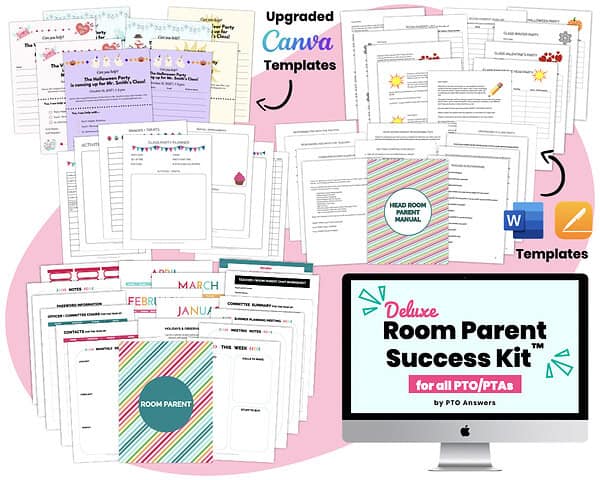
The Parent Involvement Success Guide gives you the templates, systems, and step-by-step playbooks to implement these strategies without having to figure it all out from scratch.
It’s built to equip PTO leaders and volunteers with what they actually need to drive more parent engagement.
From creating a volunteer-friendly communication system to designing meetings that feel less like work and more like community, the kit walks you through each piece.
You get actual templates you can use today, not just theory.
Watch this
Here are a few videos that cover the same strategies for getting more parents involved with your PTO as volunteers:


Over to You!
You now have the four core strategies that actually move the needle on parent involvement: personal recruitment, step by step asks, clear systems, and community-first meetings.
Moving more parents into your PTO doesn’t require fancy campaigns.
It requires a clear strategy, the right systems, and a commitment to making your PTO feel like a real community.
The next step is to put these strategies into practice.
Pick one strategy to start with this week—maybe it’s committing to having five personal conversations at pickup, or redesigning your next meeting to prioritize connection over task completion.
Whatever you choose, take action on it!
Then grab the Parent Involvement Success Guide to get the templates, systems, and playbooks that help your whole team execute these strategies consistently, week after week.


